
Why are my succulent leaves turning yellow?
By Succulent Hub|November 12, 2026
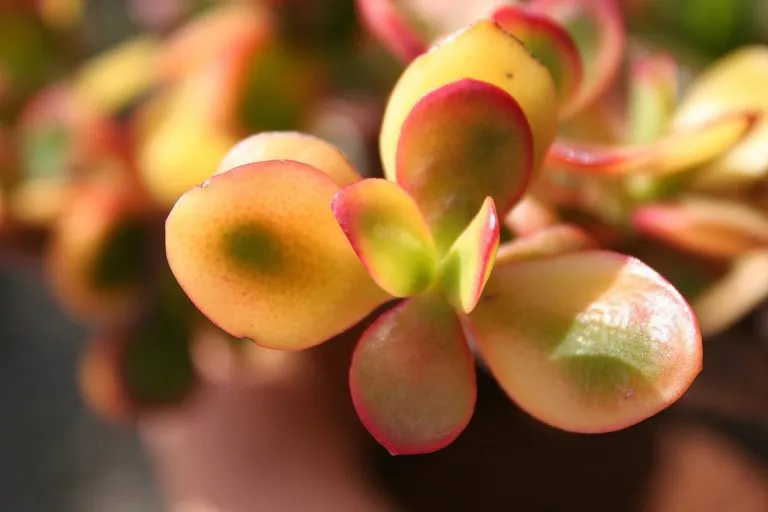
Yellow succulent leaves are often a sign of too much water. Overwatering leads to rot and yellowing leaves, so that’s the first thing to rule out. But it isn’t the only cause, and some yellow isn’t a problem at all. Where the yellow shows up on the plant and how the leaves feel when you touch them will usually tell you which one you’re dealing with.
Soft, mushy yellow leaves mean too much water
An overwatered succulent gives itself away by touch. The leaves start to yellow, they fall off under light pressure, and they feel mostly mushy instead of firm. Push a finger into the soil. If it’s still damp, you’ve found your culprit. Let the soil dry out completely before you water again, and in mid-winter that can mean watering no more than once every few weeks.
Wet soil is dangerous because it leads to root rot, which Illinois Extension calls the number one killer of succulents. In houseplants, rot shows up as noticeable wilting, a ring of brown or black tissue at or near soil level, and roots that are brown to black and possibly soft. Slide the plant out of its pot to look. If only a few roots are infected, cut them out and repot in sterile soil and a sterilized pot.
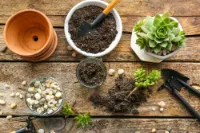
To keep it from happening again, use a pot with a drainage hole and a mix labeled for succulents and cacti. Unglazed terra-cotta is a good choice. Pot size matters too. A small plant in a big pot tends to get overwatered, so move it into a smaller container.
Dry yellow leaves at the bottom can be old age or thirst
If the yellow leaves are at the base of the plant and feel dry instead of soft, the plant may just be getting rid of its oldest leaves. That’s normal aging and die-off for houseplants, and jade is a familiar example of a plant that lets its old lower leaves yellow and drop. Some plants also shed leaves seasonally and push out new growth in spring.
Thirst looks similar, so check the soil here as well. Underwatered houseplants get lower leaves that turn yellow, dry up and fall off, and the soil feels dry and compacted. Large plants in small pots tend to be underwatered, so move them to a roomier pot.
Yellow patches on the sunny side point to sunburn
Yellow that shows up randomly, or in patches on the side facing the window, is probably sunburn. Too much sun bleaches leaves to a yellowish-green, and moving the plant to a less sunny spot fixes it. Most succulents prefer about six hours of sunlight a day but sunburn easily. When you move containers outdoors after frost danger has passed, acclimate them slowly, keep them out of direct sun on hot days and give them some shade time.
Not every yellow or orange tint is damage, though. According to the UC Master Gardener Program of Contra Costa County, carotenoid pigments create yellow and orange tones when a succulent is stressed or dormant. Summer-dormant succulents such as Dudleya and Aloe can look rough in summer without anything being wrong.
Pale, washed-out plants can be a feeding problem
When the lower leaves are yellow and many of the other leaves are pale, light green, a houseplant is short on nitrogen. Fresh soil or regular fertilizing can help. Old soil causes stress of its own, and potted succulents stress more easily when their soil hasn’t been refreshed for over 2 years.
Go easy on the fix, because succulents have low nutrient needs. Use a low-nitrogen fertilizer at half the labeled rate, about once a month in spring and summer only, and never in winter. Over-fertilizing gives weak growth that’s more prone to rot, and the Old Farmer’s Almanac ranks overfeeding second only to overwatering as the leading cause of houseplant death.
Whatever caused it, a leaf that has gone totally yellow won’t turn green again. Remove it, wait, and judge the fix by what the new growth looks like.
Sources
About the author
The Essentials
 How To Water Indoor Succulents – A Complete Guide
 How To Tell When Your Succulent Has Become Over Or Under Watered
 What Is The Best Type Of Soil For Succulents and Cacti In Pots?
Related Posts
- How to propagate succulents from leaves
- Do Succulents Go Dormant? What Is Succulent Dormancy?
- How Big Do Succulents Get? All Factors That Affect Size
- What Are The Easiest Succulents To Take Care Of?